Buying a PVC mixer on its own is very different from building a mixing line that runs from raw material to extruder. However good the mixer, if the dosing ahead of it cannot have each batch ready on time, or the conveying behind it cannot keep the extruders supplied, the line runs at the pace of its weakest link. In a turnkey mixing line those links are designed together from the start. This article walks through the stages of a typical PVC dry blend line, the equipment used at each one and the questions to answer when a project begins.
How material flows through the line
In a typical PVC dry blend line, material follows this sequence:
- raw material storage and preparation;
- gravimetric powder and liquid dosing;
- friction heating and additive absorption in the heater mixer;
- cooling in the cooler mixer;
- conveying and feeding to the extruders.
Dust control runs through all of these stages as a topic in its own right.
1. Raw material storage
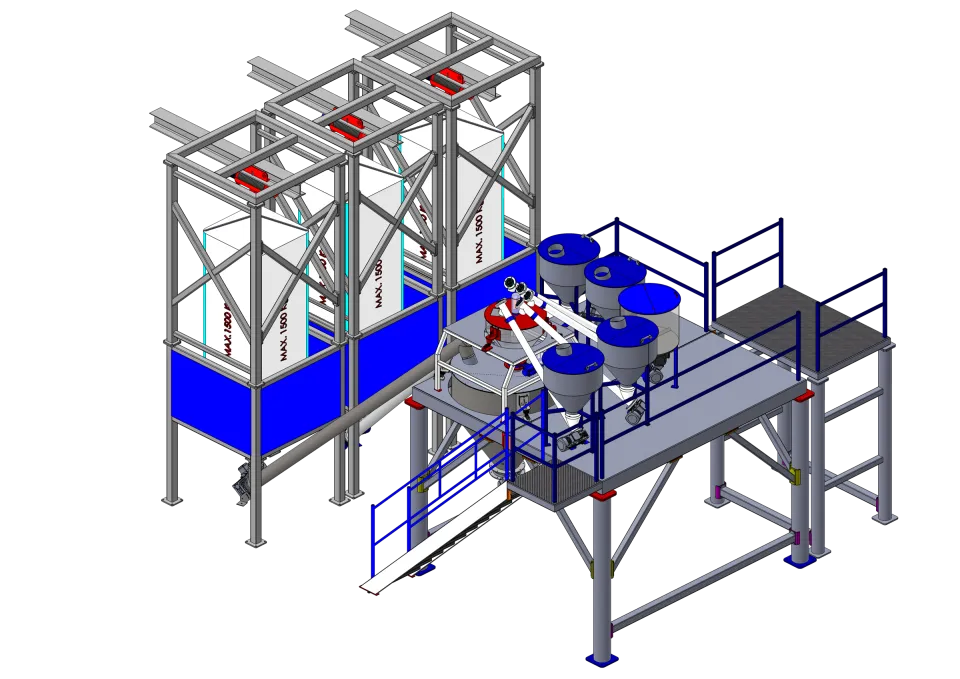
High-volume raw materials such as PVC resin and calcium carbonate are usually held in silos or big-bag discharge stations, while minor additives such as stabiliser, lubricants and pigment sit in smaller hoppers. Powder left in a silo for long periods can compact and pick up moisture. To manage that, keeping the material moving with a vertical mixer and, where needed, adding a dehumidifier are worth considering. For flexible PVC, the arrangement of drums, IBCs or tanks for plasticisers and liquid stabilisers is planned at this stage too.
2. Gravimetric powder and liquid dosing
Raw materials are fed into a weigh hopper to the recipe, and the completed batch is transferred to the mixer. The automatic gravimetric powder dosing system comes in Model H and Model V layouts; the choice depends on ceiling height, the position of silos and mixer, the number of raw materials and maintenance access. The dosing platform can be designed as one structure with the mixer below it. For liquid components, the automatic liquid dosing system works coupled with powder dosing. For help choosing a method, see gravimetric vs volumetric dosing.
3. The heater–cooler mixer
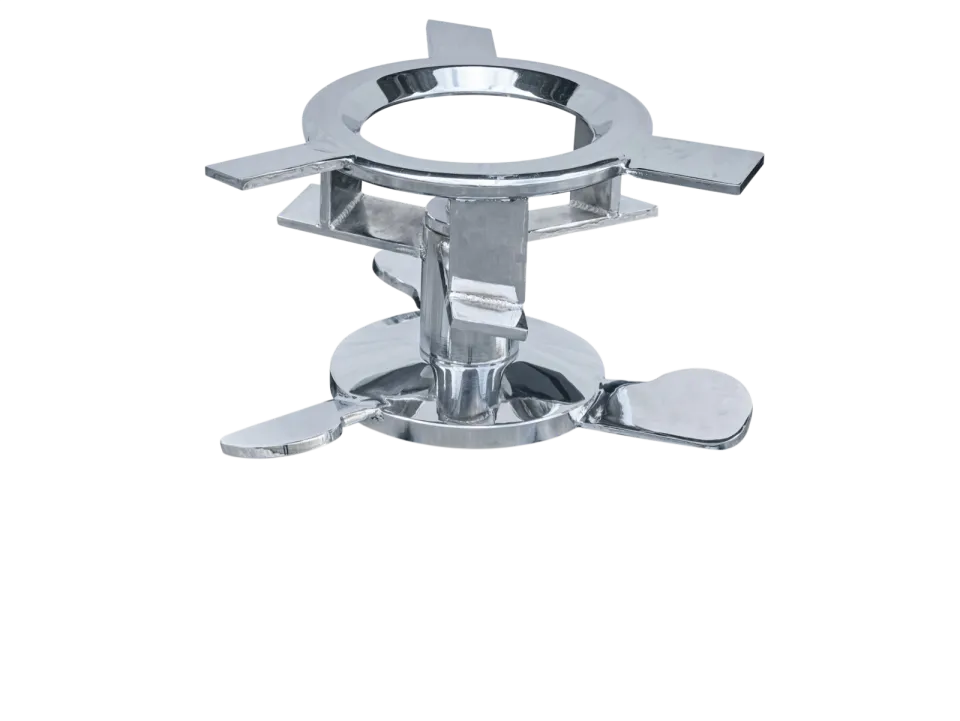
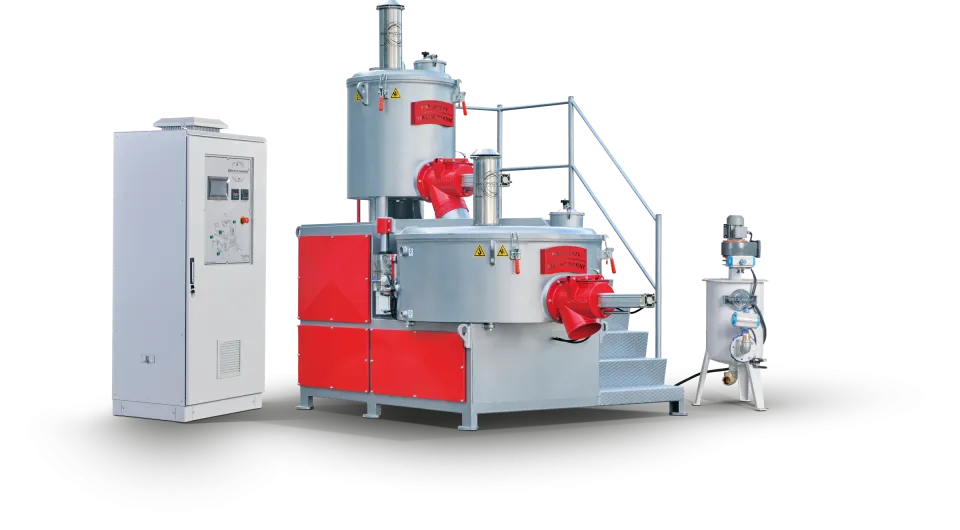
At the heart of the line is the heater–cooler (hot/cold) mixer. In the heater, high-speed blades warm the blend by friction while the additives melt and are absorbed into the resin. For rigid PVC the batch is typically discharged at around 110–120 °C. Depending on capacity and layout, the choice is between the horizontal-cooler EPM-H (150–500 kg per batch) and the vertical-cooler EPM-V (100–200 kg per batch); the catalogue gives 4–6 batches per hour for both. To estimate batch size, try the mixer capacity calculator.
4. Cooling
The hot blend drops into the cooler mixer and is brought down through jacketed walls, typically to around 40–50 °C. Cooling is one of the steps that most affects the line’s pace: if it takes longer than heating, the heater waits and batches per hour fall. Cooling-water supply, temperature and flow should therefore be treated as part of the line design. Sizing for the warmest season is a safe approach.
5. Extruder feeding
The cooled dry blend is conveyed through one shared line or a separate line to each extruder. Extruder feeding systems include flexible spring (Flexcom), screw and air conveying. The choice depends on whether the material is powder or granules, conveying distance and height difference, obstacles on the route, the number of extruders and hourly demand. Preventing segregation in transit matters, because it protects the homogeneity achieved in the mixer.
Dust filtration and auxiliary equipment
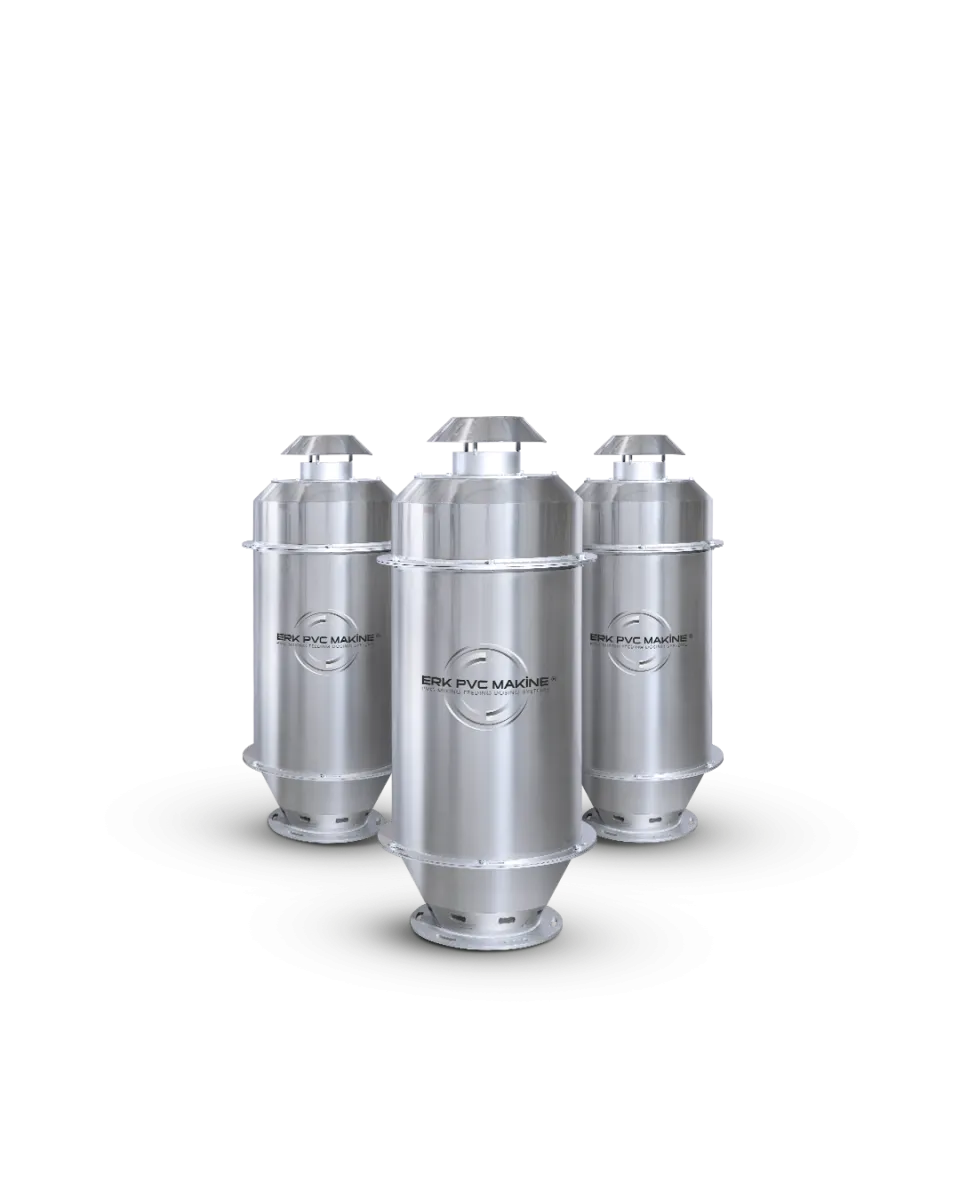
Air carries dust out at points such as the mixer, the dosing weigh hopper and the silos. A jet filter captures that dust; its elements are cleaned by pulses of compressed air, and in many cases the collected material can return to the process. For air conveying, a vacuum system, blower and air filter complete the picture; powder and granule sieves protect the intake, and a dehumidifier helps where moisture is an issue. See the auxiliary equipment category for the full range.
Automation: one recipe for the whole line
The value of a turnkey line comes from equipment that works in step. When the operator selects a recipe, dosing weighs the raw materials, the batch is transferred to the mixer, the blend passes to the cooler at its set temperature and the cooled material is handed to the feeding line. For no step to hold up the next, capacity has to be calculated for the line as a whole, not machine by machine.
Planning questions for the start of a project
- What will be produced: profiles, pipes, cable, foil, WPC or another application?
- How many extruders will be fed, what is total hourly demand, and are there growth plans?
- How many powder and liquid components does the recipe have, and do they arrive by silo, big bag or sacks?
- Will you run one recipe or change recipes often?
- What are the building dimensions, ceiling height and distance to the extruders?
- Is there enough electrical power and cooling water?
- Which existing equipment will stay in the line?
For example line layouts by application, see PVC door and window profiles, PVC drain pipes and PVC cable. For how scope affects investment, read what determines the price of a PVC mixer.
Frequently asked questions
How is a turnkey line different from buying equipment separately?
In a turnkey line, dosing, mixing, feeding and filtration are sized together and run under one control logic. When items are bought separately, capacity and interface mismatches are more common.
Can a line be built around an existing mixer?
If the existing mixer’s capacity and condition are suitable, the line can often be completed by adding dosing upstream and feeding downstream. A layout and capacity review settles the question.
What information should I prepare?
Answers to the questions above, the dimensions of the available space and an approximate recipe are enough to start. Share them on the quote page.