Mixer Blades
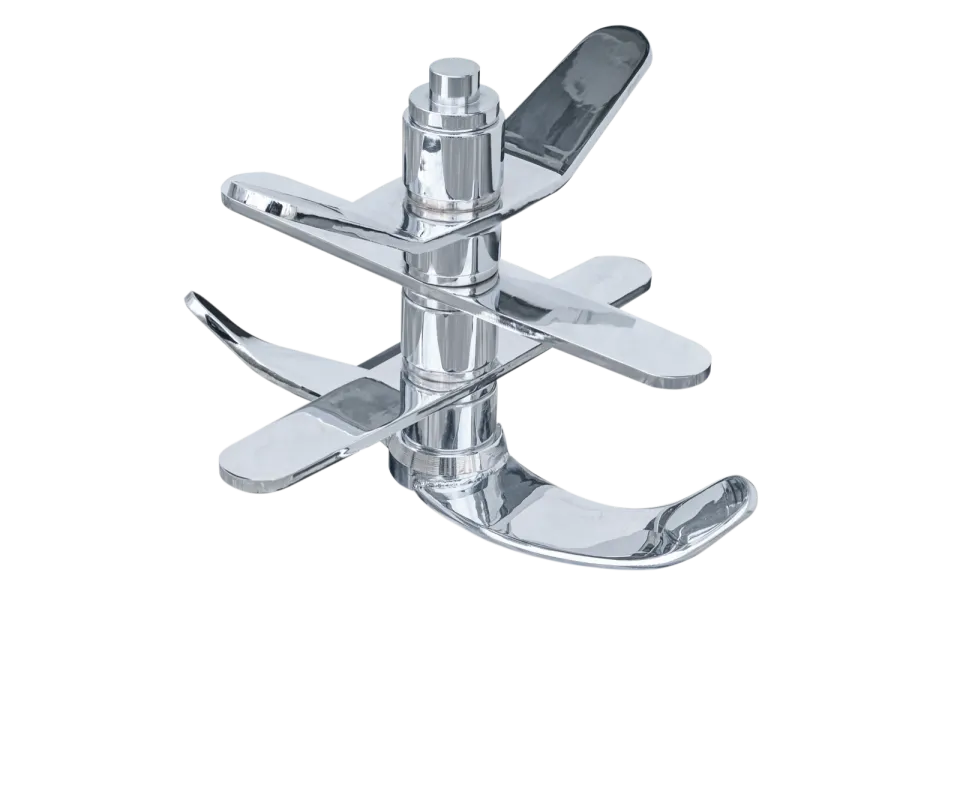
Mixing blades and spare parts for heater and cooler mixers. Correct geometry and good balance have a direct effect on blend homogeneity, heating time and the smooth running of the mixer.
Ask on WhatsApp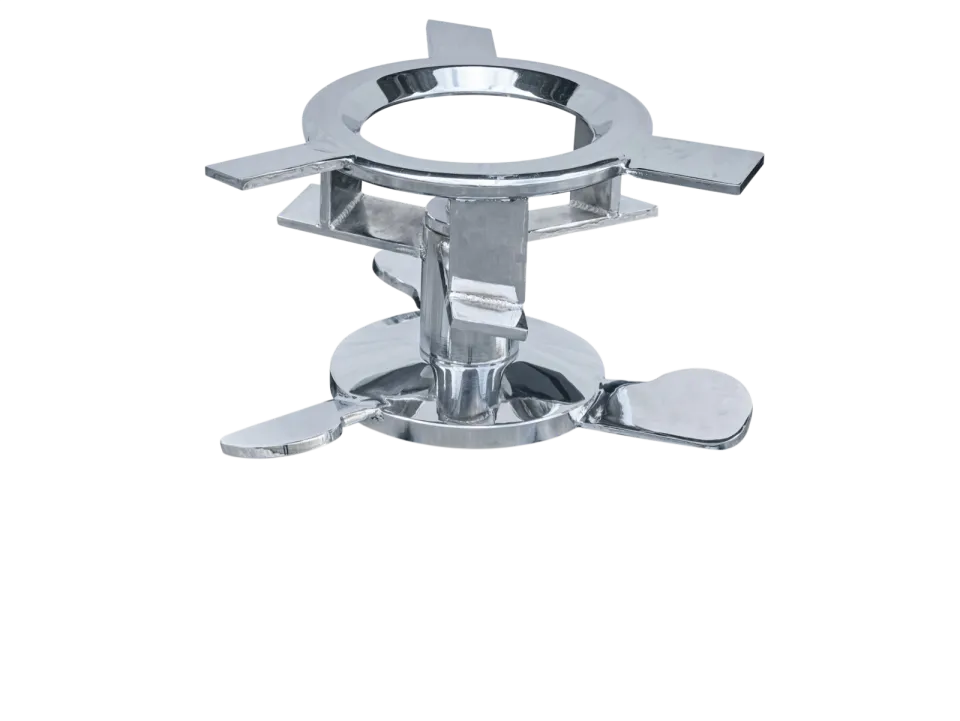
Much of a heater–cooler mixer’s performance comes down to its blades. However powerful the motor, it is the blade that transfers that energy into the material. Erk PVC Makine supplies mixing blades and spare parts for heater and cooler mixers.
What the blades do in a heater mixer
In a high-speed heater mixer the blade set usually has several tiers. The bottom blade scrapes the floor of the vessel, keeping material from settling and overheating there, and throws the charge upwards. The upper tiers turn the material into a fluidised vortex. That movement provides both the even distribution and the frictional heat needed to melt the additives. Blade angle and tier arrangement are among the factors that set how fast the blend heats up and how long each batch takes.
Blades in the cooler mixer
In the cooler the aim is not to generate heat but to keep bringing hot material into contact with the cooled walls. Cooler blades therefore run at lower speed and focus on renewing the material along the wall. Scraping matters here too, because a layer of material stuck to the wall weakens heat transfer.
Wear and balance
PVC blends, especially highly filled ones, gradually wear the blade edges. A worn blade moves the material less effectively, heating takes longer and the number of batches per hour may fall. Weight differences between blades cause vibration at high speed and put extra load on the bearings and shaft. That is why replacing blades as a set, with balance checked, is recommended.
What to check during maintenance
During planned stops, inspect the blade edge profile, the fixing bolts and the clearance between the bottom blade and the vessel floor. As wear opens up that clearance, more material is left behind on the floor, and later batches can show scorching or discolouration. Regular checks are the simplest way to avoid unplanned downtime. Blade-related symptoms and other frequent issues are covered in our guide to PVC turbo mixer maintenance and common faults.
Ordering replacement blades
To identify the right part, send us the make and model of the mixer, the vessel volume, the dimensions of the current blades and, if possible, photographs. If you are thinking of renewing the whole mixer, take a look at the EPM-H horizontal mixer and EPM-V vertical mixer series.
Images
Frequently asked questions
Frequently asked questions
When should mixer blades be replaced?
A noticeably longer heating time, fewer batches per hour or more vibration at high speed can point to blade wear or imbalance. In that case the blades should be inspected.
What information is needed to order replacement blades?
The mixer make and model, vessel volume, dimensions of the current blades and, ideally, photographs are enough to identify the right part.
Related products
-
 JET
Jet Filters and Auxiliary Equipment
Jet filters, air filters, vacuum systems, powder and granule sieves, air sets, blowers and dehumidifiers: the auxiliary equipment that…
View -
Bag Filling Machines
Bag filling machines fill powder, small-particle and mixed products precisely into 5–50 kg bags. Linear models come with one, two or three…
View
Quote request
Request a quote for a mixer or mixing system
Share your target capacity and application; our engineers will reply with a quote for the right model and system configuration.
- 01Fill in the form or call us
- 02We clarify your application and capacity
- 03We send a quote with a model and system proposal