Applications
PVC floor covering
In PVC flooring, whether flexible vinyl such as LVT or rigid SPC planks, mineral filler can make up a large part of the formulation. Heavy, abrasive blends need careful planning for motor power, blades and dust control.
PVC flooring broadly falls into two families: flexible vinyl sold as rolls or tiles, including LVT (luxury vinyl tile), and the rigid SPC (stone plastic composite) planks that have spread quickly in recent years, which carry a very high mineral filler content. In both, fillers such as calcium carbonate form a large share of the recipe. The finished floor has to stay dimensionally stable under foot traffic, furniture loads and changing room temperatures.
How a heavy blend loads the mixer
As filler content rises, so does bulk density. More kilograms fit into the same volume, and the heater motor sees more torque and higher current. Mineral fillers are also abrasive, so blade tips and inner mixer surfaces wear faster than they would with lightly filled recipes. A worn blade produces less frictional heat, the batch takes longer to reach temperature and cycle times stretch. That is why capacity for a flooring line should be calculated from the real recipe density rather than from nominal litres.
Flexible vinyl adds a second challenge, because plasticiser and filler have to be handled together: the liquid must be fully absorbed and the blend must still flow freely despite the heavy filler load. Rigid SPC planks usually contain no plasticiser, yet their filler share is so high that getting the blend out of the cooler without lumps becomes critical. In both cases, size the cooler and its cooling water as carefully as the heater.
Recommended equipment
The EPM-H horizontal mixer series is the obvious main mixer here. Its standard heater motors range from 75 to 200 kW, with optional higher ratings of 110, 160, 200 or 250 kW, and that upgrade deserves serious thought for dense formulations. Erk also notes that custom capacities can be discussed for non-standard recipes. To check a dense SPC recipe in kilograms rather than litres, try the mixer capacity calculator, and compare horizontal and vertical options under heater–cooler mixers.
The most practical defence against wear is to keep spare mixer blades on hand and to track blade condition alongside batch time. An automatic powder dosing system ensures that large quantities of filler are weighed accurately, while a jet filter and vacuum system keeps filler dust under control. For plasticised LVT recipes, an automatic liquid dosing system can weigh DOP- or DOTP-type plasticisers alongside the powder dosing. Early signs of wear are covered in PVC turbo mixer maintenance and common faults.
Questions before you start the project
- What is the filler content of the recipe, and the expected bulk density of the blend?
- Will you produce flexible vinyl (LVT), rigid SPC planks, or both?
- Is there a scheduled maintenance interval for blade replacement?
- In what form does filler arrive, and how will it move around the plant?
- Can your electrical supply support a higher-rated motor?
Products for this application
-
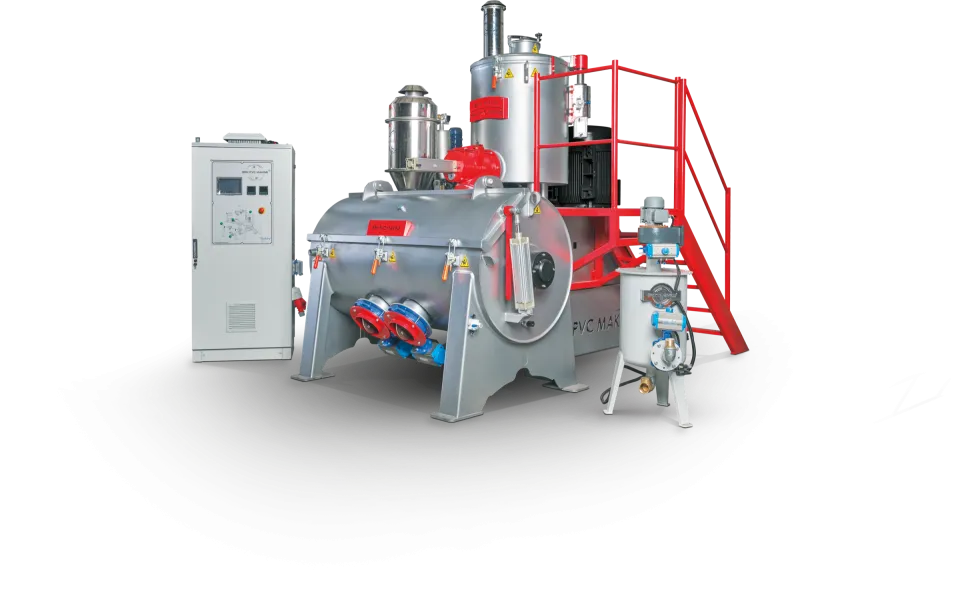 EPM-H
Horizontal PVC Turbo Mixer
The EPM-H series pairs a high-speed (turbo) heater mixer with a horizontal cooler mixer: a hot/cold mixing line for PVC dry blend. Five…
View -
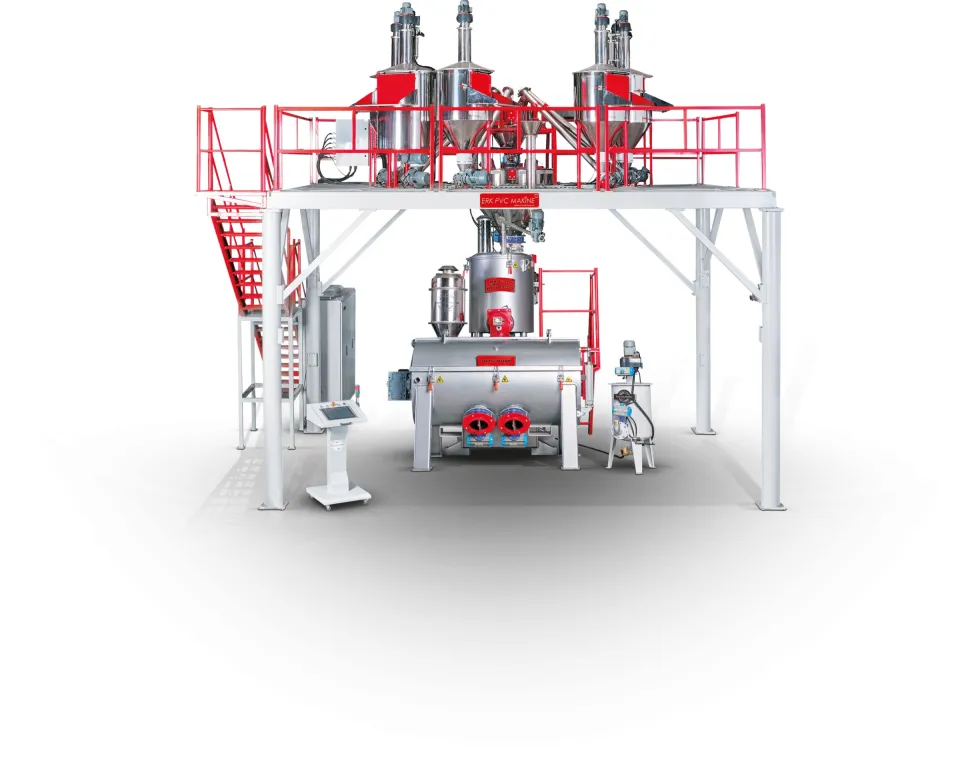 H / V
Gravimetric Powder Dosing System
The automatic gravimetric powder dosing system weighs the PVC formulation under computer control, hands-free, transfers it to the mixer…
View -
Liquid Dosing System
The automatic gravimetric liquid dosing system weighs plasticisers such as DOP and DOTP, and the liquid stabilisers needed for soft PVC…
View -
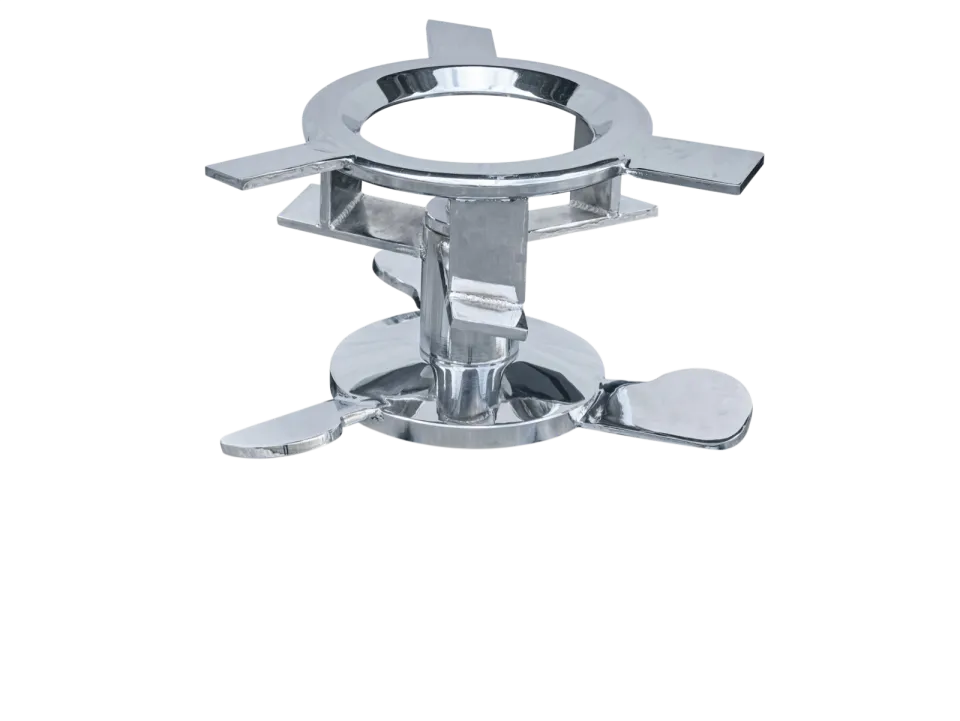
Mixer Blades
Mixing blades and spare parts for heater and cooler mixers. Correct geometry and good balance have a direct effect on blend homogeneity…
View -
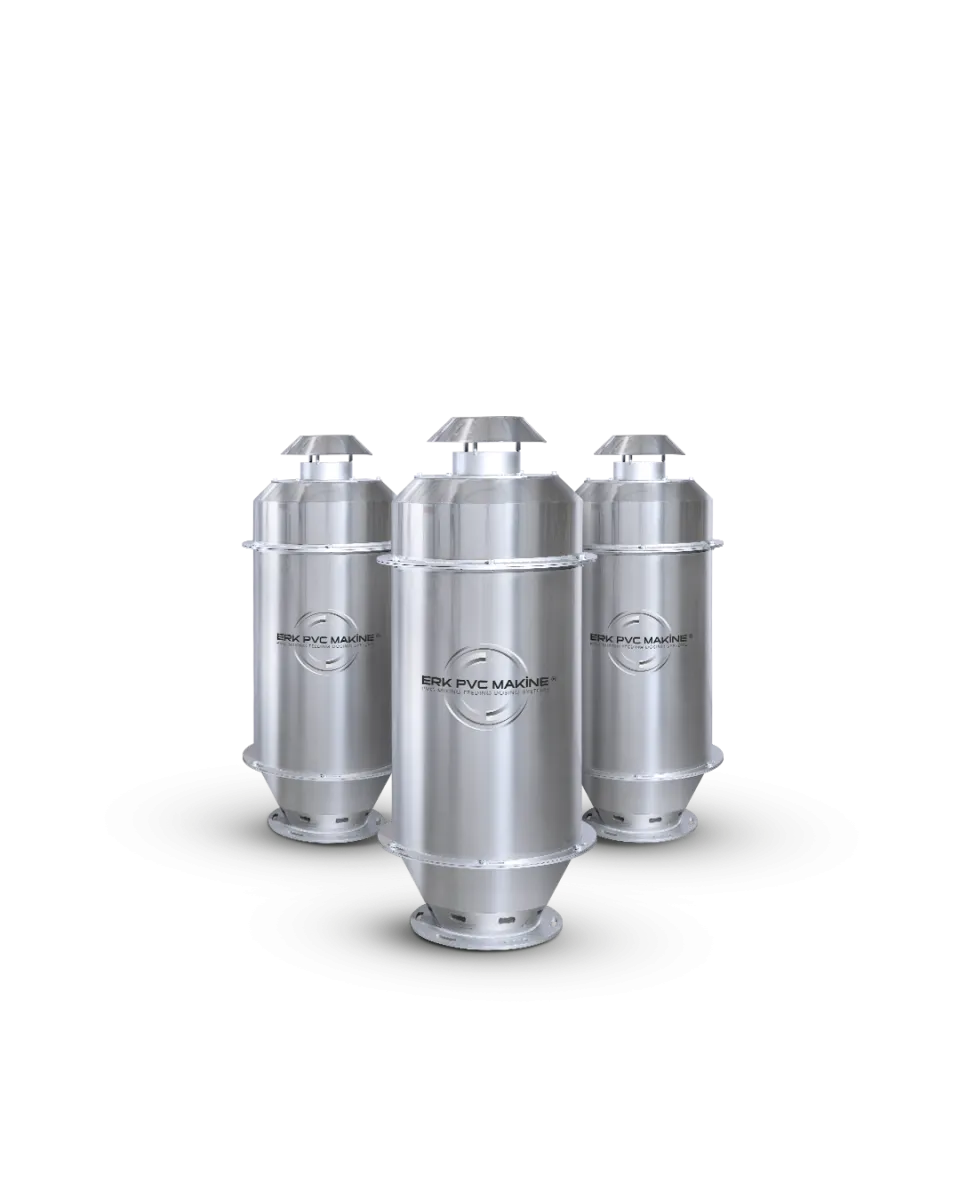 JET
Jet Filters and Auxiliary Equipment
Jet filters, air filters, vacuum systems, powder and granule sieves, air sets, blowers and dehumidifiers: the auxiliary equipment that…
View
Quote request
Request a quote for a mixer or mixing system
Share your target capacity and application; our engineers will reply with a quote for the right model and system configuration.
- 01Fill in the form or call us
- 02We clarify your application and capacity
- 03We send a quote with a model and system proposal