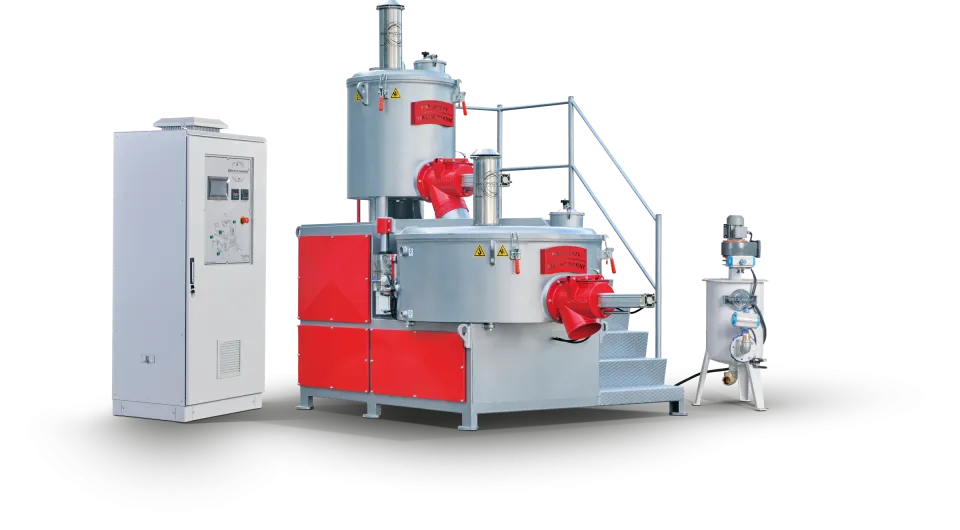
A heater–cooler mixer, better known as a PVC turbo mixer, is one of the hardest-working machines on a line: high-speed blades, large motors and vessels that heat up and cool down all day. Neglected maintenance rarely shows up as a sudden breakdown. More often it creeps in as longer cycle times, rising vibration and drifting blend quality. This article outlines the basics of preventive maintenance and the likely causes of common symptoms, based on general engineering knowledge. It is not a repair manual; for mechanical, electrical and compressed-air repairs, refer to your machine’s manufacturer and its operating instructions.
Safety first
Before any job that involves looking into the vessel, opening the lid or reaching the blades, isolate, lock out and tag out the motor. High-speed blades take time to stop, so never open the lid until they are completely still. Hot vessel surfaces and freshly discharged material can burn. On pneumatically operated valves and cylinders, release the air pressure before working on them.
Preventive maintenance: what to check, and how often
Exact intervals should follow the manufacturer’s maintenance instructions, running hours and your formula. As a general framework:
Every shift or every day
- Listen and look for unusual noise, vibration or smells.
- Check for build-up on the vessel wall, the lid and the discharge opening.
- Watch that the discharge valve closes fully and does not leak dust.
- Note cooling-water inlet and outlet temperatures.
- Record batch time and discharge temperature; a drift is the first sign of most faults.
Weekly or monthly
- Check the temperature probe for material build-up and clean it.
- Check blade fixing bolts for tightness and blade tips for wear.
- Look for dust or material leaking at the shaft seal.
- Where fitted, check belt tension and coupling condition.
- Inspect the jet filter elements, cleaning pulses and dust hopper.
Periodically, during planned stops
- bearing lubrication and bearing temperature monitoring;
- measuring the clearance between the bottom blade and vessel floor;
- checking the cooling jacket for scale and blockages;
- checking electrical connections, motor current and drive or soft-starter settings.
Symptom → likely cause guide
| Symptom | Likely causes | Check first |
|---|---|---|
| Rising vibration | Blade wear or imbalance, material stuck to a blade, loose bolts, bearing wear | Blades and fixings, bearing temperature and noise |
| Set temperature not reached | Worn blades, low fill level, belt slip, fouled probe, damp raw material | Batch weight, blade profile, probe, motor current |
| Longer cycle time | Warm or low-flow cooling water, scale in the jacket, wall build-up, worn cooler blades | Time heating and cooling separately |
| Discharge valve leaking | Worn seal, build-up on the seat, air pressure or cylinder adjustment | Seal and seat cleanliness, air pressure |
| Dust leaking at the shaft | Worn shaft seal, sealing-air problem (if fitted) | Seal condition, size of the leak |
| Discolouration, burnt specks | Material left on the floor, widened floor clearance, overshooting temperature | Floor clearance, cleaning, temperature measurement |
A closer look at the symptoms
Vibration
On a blade set turning at high speed, even small weight differences turn into vibration and put extra load on bearings and shaft. Worn blades, material stuck to one blade, or a single blade replaced on its own can upset the balance, which is why replacing blades as a set, with balance checked, is recommended. If vibration rises suddenly, stop the machine and do not restart it until the cause is found.
Missed temperature and slow heating
Because a turbo mixer heats by friction, anything that reduces friction lengthens heating: worn blade tips, an under-filled vessel, a slipping belt or reduced speed. Material caked on the probe can make the reading lag behind the real temperature, in which case the problem is measurement, not heating. Damp raw material also slows heating, since energy goes into evaporating the water.
Cooling-water problems
Cooler performance depends heavily on cooling-water temperature and flow. Warmer water in summer, scale inside the jacket or a partly closed valve all lengthen cooling. When cooling takes longer than heating, the heater has to hold a finished batch until it can discharge, the temperature may overshoot and batches per hour fall. Logging the inlet-to-outlet water temperature difference helps reveal jacket fouling early.
Valve and seal leaks
When the discharge valve seal wears or material builds up on the seat, dust can escape during heating or hot material can seep into the cooler early. A worn shaft seal also shows up as a dust leak. In both cases, acting before the leak grows protects blend quality and the working environment.
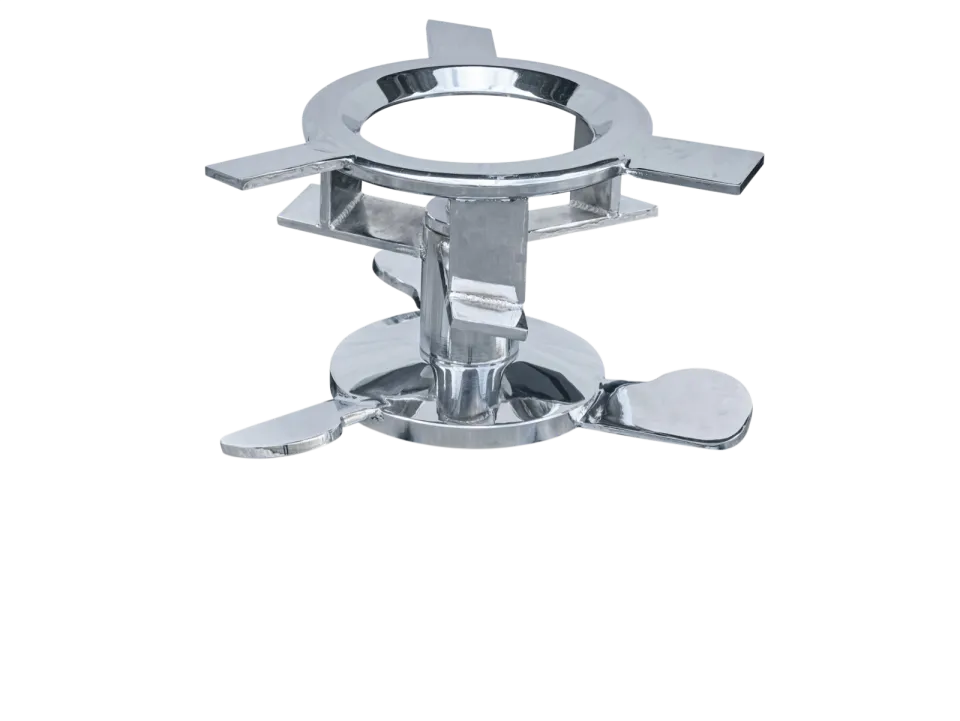
Blade wear
Highly filled formulas in particular wear blade edges over time. Wear means the blend is moved less effectively, heating takes longer and the floor clearance opens up. Material left in that gap can appear in later batches as burnt specks or discolouration. Blade condition should be tracked alongside batch time; more on what the blades do is on the mixer blades page.
When to call the manufacturer
Anything beyond basic checks and cleaning, such as bearing and seal replacement, shaft and coupling alignment, removing and refitting the blade set, or electrical and drive settings, should be handled by the machine’s manufacturer or an authorised technical team. When reporting a fault, details such as the machine model, when the symptom started, batch times and temperature records make diagnosis much faster.
If you suspect a blend-quality issue is process-related rather than mechanical, see our article on PVC dry blend problems; for the basic working principle, read how a heater–cooler mixer works.
Frequently asked questions
When should turbo mixer blades be replaced?
There is no fixed interval; it depends on the formula and running hours. A clear increase in heating time, rising vibration and a widening floor clearance all indicate that replacement is approaching.
Why do cycle times get longer in summer?
Usually because warmer cooling water slows the cooler. The heater then has to wait until the cooler is free, and the number of batches per hour drops.
Why keep maintenance records?
Simple logs of batch time, discharge temperature and water temperatures let you spot slowly developing problems before they become breakdowns.