Applications
PVC door and window profiles
Gloss, colour stability and impact strength in window and door profiles depend heavily on dry blend quality. This page explains how to set up a high-output mixing line for rigid profile extrusion.
Window and door profiles are one of the largest-volume uses of rigid PVC. A finished profile has to cope with years of sunlight, rain and daily temperature swings, so the formulation usually combines a heat stabiliser (today mostly calcium–zinc), an impact modifier, a processing aid, internal and external lubricants, calcium carbonate and a generous share of TiO₂ for weathering. On a white profile, even a slight yellow tint or a dull patch is obvious once the frame is installed.
What a profile formulation needs from the mixer
The aim is to have every additive coat the resin particles evenly and to melt the lubricants completely. In the heater mixer, temperature rises mainly through friction, and discharge typically happens somewhere around 110–125 °C. The blend then has to be brought down quickly in the cooler, usually to around 40–50 °C. If cooling lags, lumps form, colour drifts and part of the stabiliser is consumed before the material ever reaches the extruder. Hitting the same discharge temperature batch after batch is what gives a steady melt pressure and a consistent surface finish.
Erk equipment that fits
For high-tonnage profile plants, the EPM-H horizontal heater–cooler mixer is the natural choice. Models from EPM-H150 to EPM-H500 are rated at 150–500 kg per batch and 4–6 batches per hour on a standard profile formulation, with real figures depending on the recipe. The heater motor can be supplied with a frequency variator (FV) or a soft starter (SS), so speed can be matched to the formulation. You can compare this horizontal hot/cold turbo mixer with its vertical-cooler alternative under heater–cooler mixers, and the mixer capacity calculator turns your extruder count into a first batch-size estimate.
The automatic gravimetric powder dosing system weighs resin and additives under computer control, which keeps the formula identical regardless of shift or operator. Finished blend can then travel to the lines through closed extruder feeding systems, with a jet filter handling the dust. How a profile line is planned as one project from weighing to extrusion is covered in turnkey PVC mixing line.
Questions to settle before ordering
- How many extruders will the line serve, and what is the total hourly demand?
- Do white and coloured profiles need separate silos or a separate mixing line?
- If you are moving from lead to Ca/Zn, has the discharge temperature been re-validated?
- Will your cooling water stay cold enough during summer?
- Have you left room for a larger model or a second line as volumes grow?
Products for this application
-
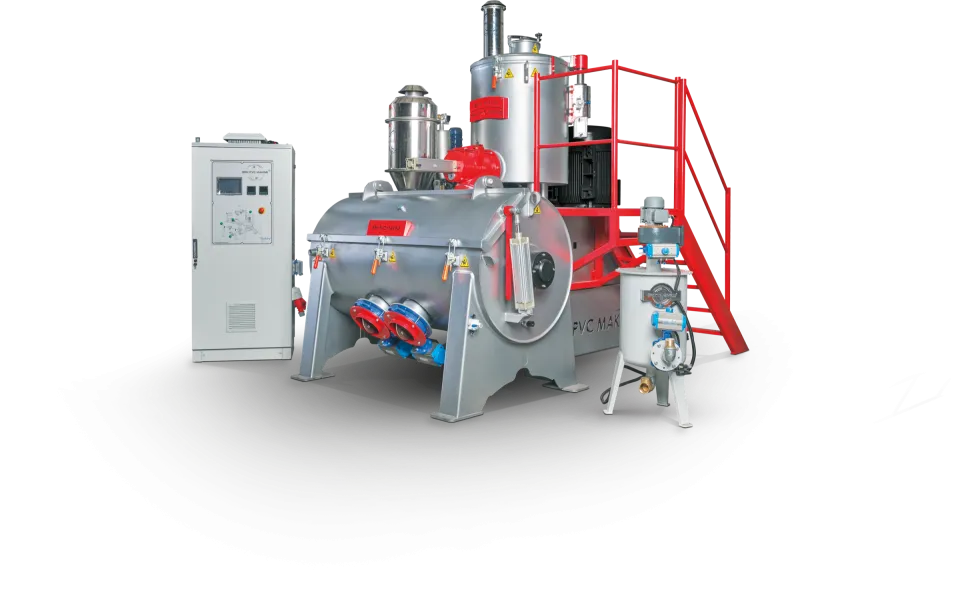 EPM-H
Horizontal PVC Turbo Mixer
The EPM-H series pairs a high-speed (turbo) heater mixer with a horizontal cooler mixer: a hot/cold mixing line for PVC dry blend. Five…
View -
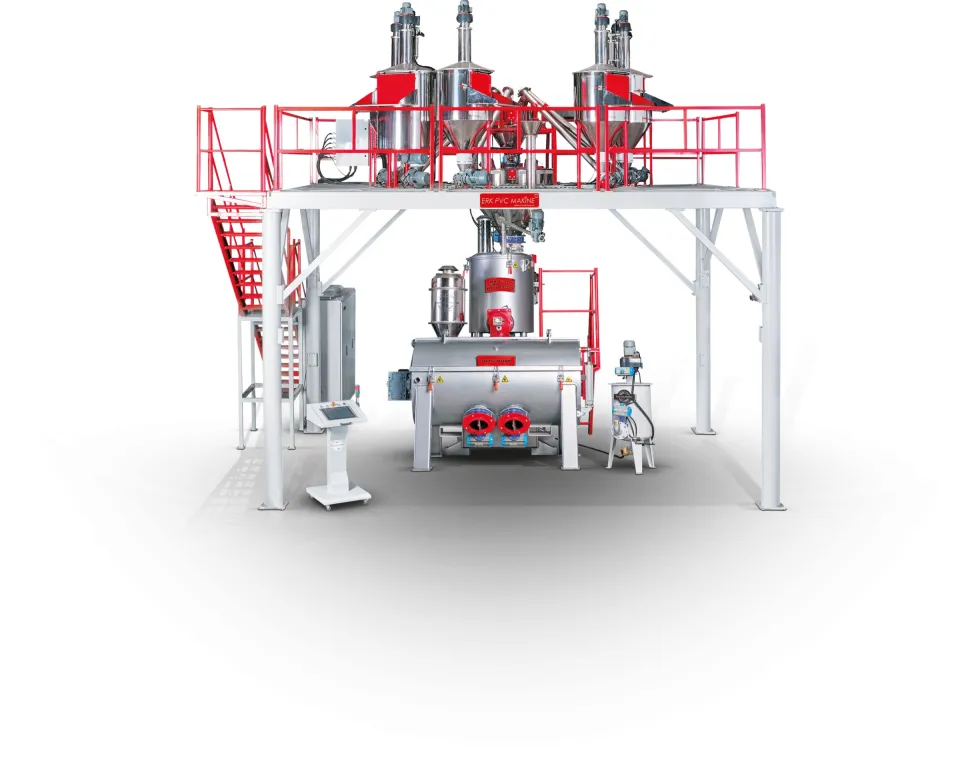 H / V
Gravimetric Powder Dosing System
The automatic gravimetric powder dosing system weighs the PVC formulation under computer control, hands-free, transfers it to the mixer…
View -
Extruder Feeding Systems
Extruder feeding systems carry PVC dry blend from the mixer to the extruders continuously, through one line or to each extruder…
View -
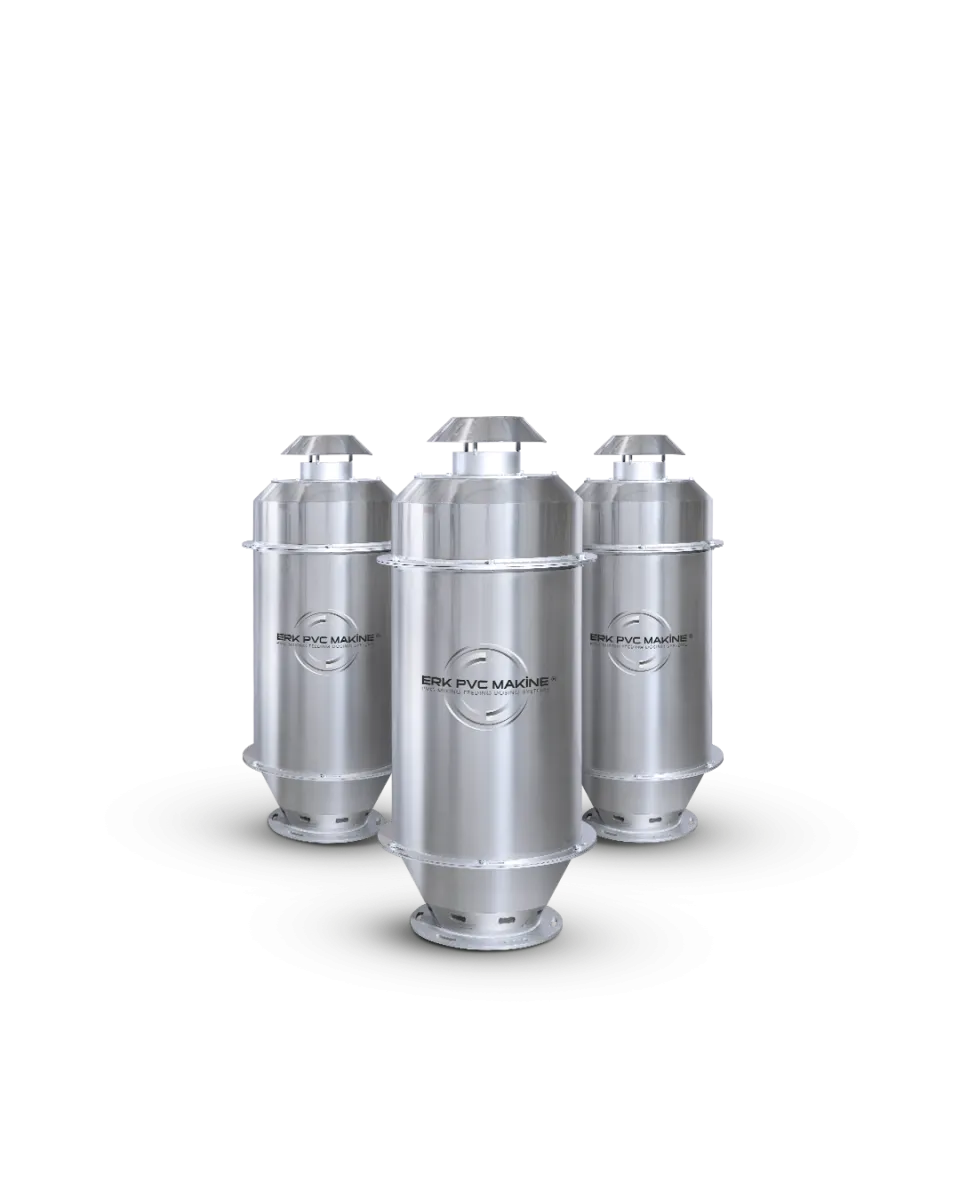 JET
Jet Filters and Auxiliary Equipment
Jet filters, air filters, vacuum systems, powder and granule sieves, air sets, blowers and dehumidifiers: the auxiliary equipment that…
View
Quote request
Request a quote for a mixer or mixing system
Share your target capacity and application; our engineers will reply with a quote for the right model and system configuration.
- 01Fill in the form or call us
- 02We clarify your application and capacity
- 03We send a quote with a model and system proposal