Applications
PVC cable
Cable insulation and sheathing compounds are flexible PVC recipes rich in plasticiser and often loaded with flame-retardant fillers. Full plasticiser absorption and well-coordinated liquid and powder dosing are what make or break them.
In wire and cable, PVC does two jobs: it insulates the conductor and it forms the outer sheath that protects the whole cable. Both compounds are flexible. Alongside the resin they typically contain plasticisers such as DOP, DINP or DOTP, a heat stabiliser, calcium carbonate and, very often, flame retardants. Insulation grades are judged largely on electrical properties, while sheathing grades are judged on abrasion resistance and how they behave in a fire.
Getting the plasticiser into the resin
With a flexible compound, the goal is for the liquid plasticiser to be drawn fully into the pores of the resin so that the result is a dry, free-flowing powder. As the heater mixer warms the batch, the resin opens up and absorption speeds up. Add the plasticiser too early, or all at once, and the blend can stay wet, stick to the walls and start to form lumps. When and how quickly the liquid goes in is therefore as much a part of the recipe as the quantities themselves. Fillers and flame retardants added after absorption soak up surface moisture and improve flow. The finished blend is then cooled in the cooler mixer before compounding or direct extrusion.
Handling liquids and powders together
An automatic liquid dosing system weighs plasticisers and liquid stabilisers into the mixer and can be integrated with the automatic powder dosing system, so the entire recipe, liquids included, runs from a single computer control. Why weighing plasticiser beats metering it by volume is explained in gravimetric vs volumetric dosing, and all weighing options are listed under dosing systems. For the mixing itself, the EPM-H horizontal heater–cooler mixer is well suited; the frequency variator option helps when you want to adjust speed during liquid addition.
If you run many recipes across different hardness levels and fire classes, trialling new ones on the laboratory mixer first reduces the risk of costly production surprises.
Questions for a cable compound line
- How many different plasticisers and liquid additives does the recipe use?
- Will liquids be fed from drums, IBCs or bulk tanks?
- Will the blend be pelletised, or processed directly as dry blend?
- If flame-retardant filler levels are high, has motor power been sized accordingly?
Products for this application
-
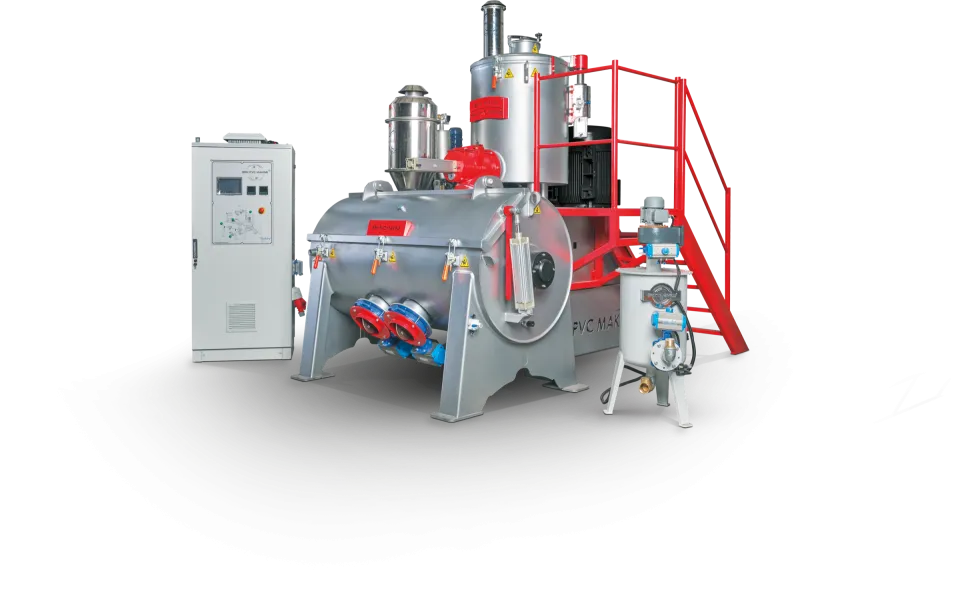 EPM-H
Horizontal PVC Turbo Mixer
The EPM-H series pairs a high-speed (turbo) heater mixer with a horizontal cooler mixer: a hot/cold mixing line for PVC dry blend. Five…
View -
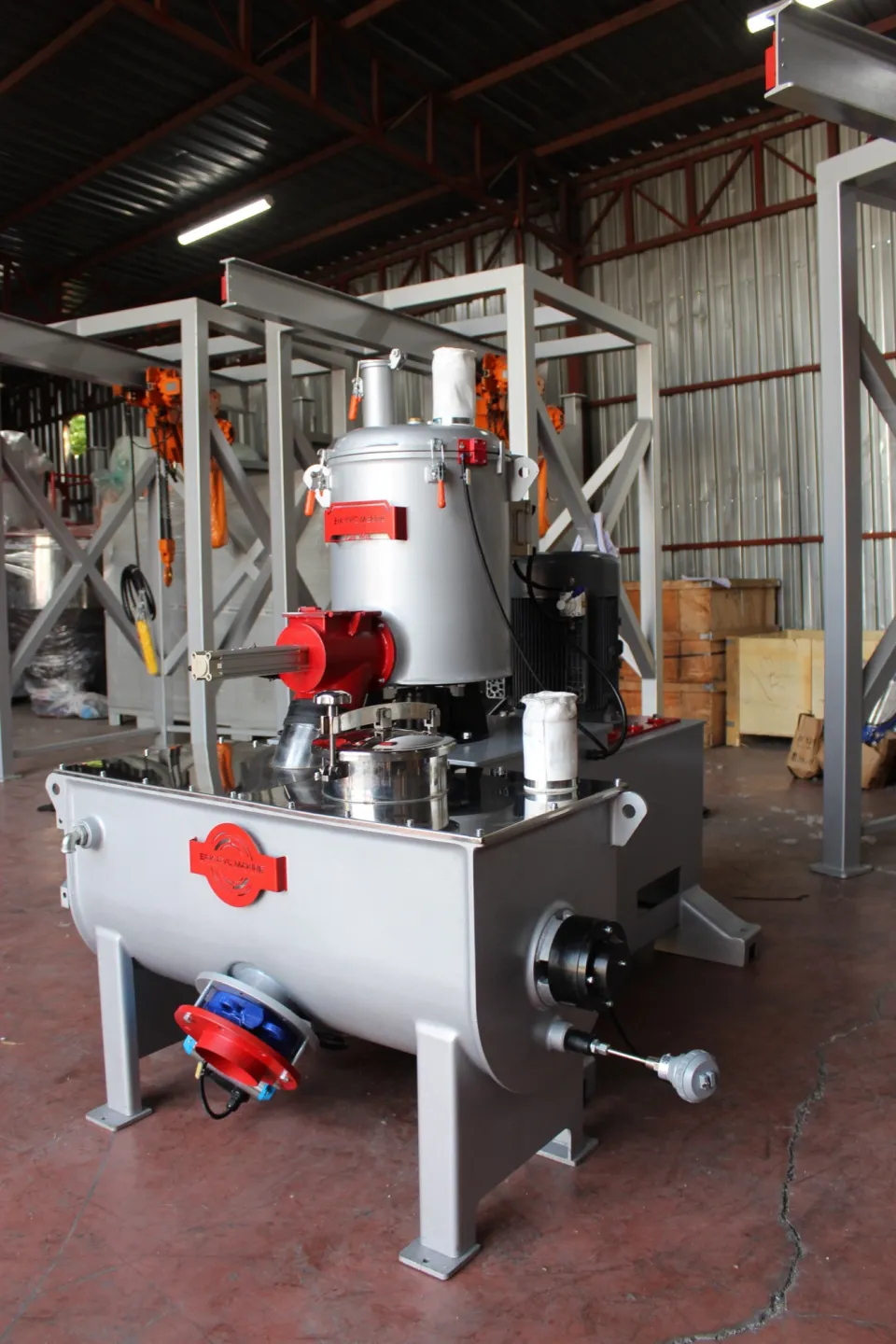
PVC Laboratory Mixer
The EPM laboratory mixer is a low-capacity laboratory heater-cooler mixer for trialling new PVC formulations and alternative raw materials…
View -
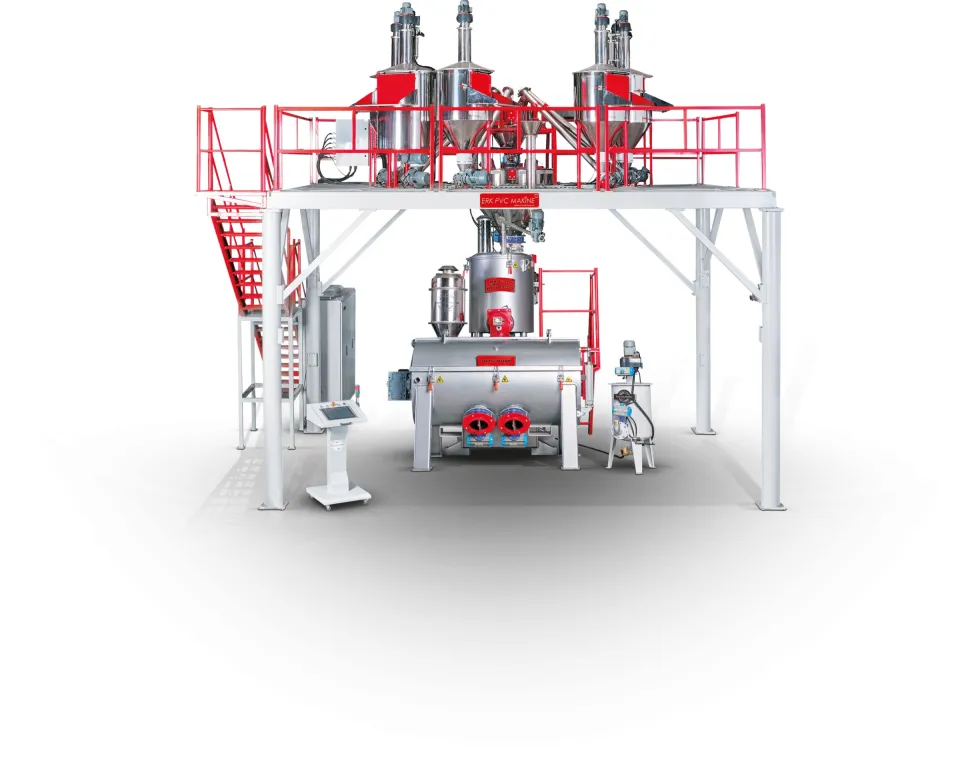 H / V
Gravimetric Powder Dosing System
The automatic gravimetric powder dosing system weighs the PVC formulation under computer control, hands-free, transfers it to the mixer…
View -
Liquid Dosing System
The automatic gravimetric liquid dosing system weighs plasticisers such as DOP and DOTP, and the liquid stabilisers needed for soft PVC…
View
Quote request
Request a quote for a mixer or mixing system
Share your target capacity and application; our engineers will reply with a quote for the right model and system configuration.
- 01Fill in the form or call us
- 02We clarify your application and capacity
- 03We send a quote with a model and system proposal