Many extrusion problems do not start at the extruder at all. Surface ripples, colour drift between batches, scattered mechanical results or bridging in the feed hopper often trace back to a dry blend that was not made the same way every time. Below are seven points that matter most when preparing rigid and flexible PVC dry blend, together with the mistakes we see most often on the shop floor.
Preparation: raw materials and recipe
1. Check moisture and raw-material condition
PVC resin, and fillers such as calcium carbonate in particular, can pick up moisture from the air. Damp raw material produces steam in the hot mixer, slows heating and comes back later as voids, bubbles or surface defects in the extrudate. Storing bagged material off the floor in a closed, dry area, using opened bags quickly and keeping an eye on warehouse conditions in humid months is usually the first and cheapest fix. Where moisture is a recurring problem, auxiliary equipment such as a dehumidifier is worth considering.
2. Standardise weighing and order of addition
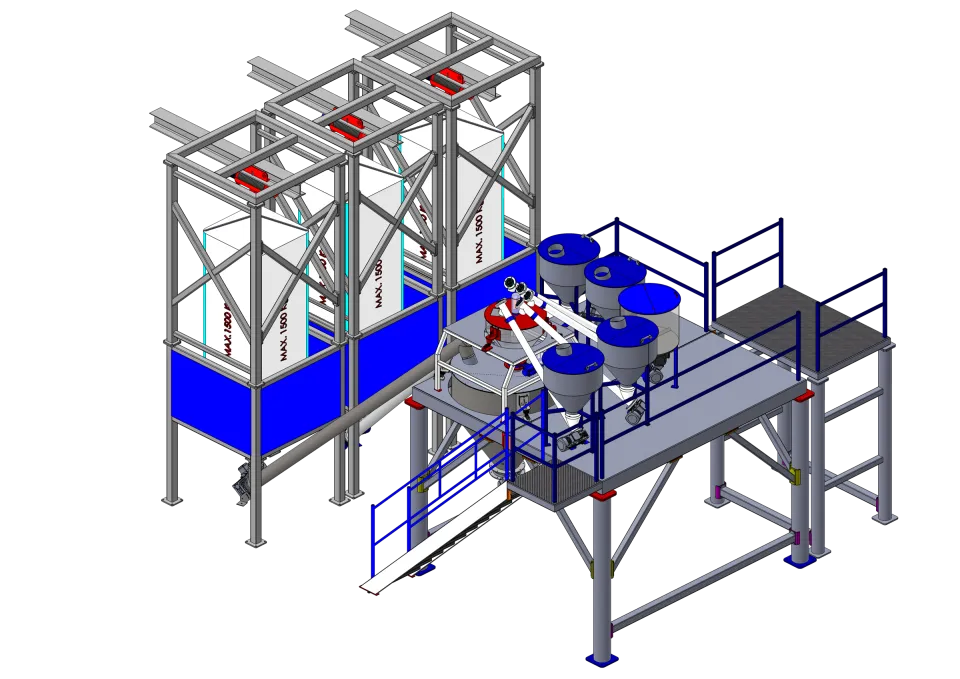
Minor ingredients such as stabiliser, lubricants and pigment are only a few percent of the batch weight, yet they define how the compound behaves. Small weighing errors on these components show up as clear differences from one batch to the next. If weighing is manual, calibrated scales and a written checklist are non-negotiable. If batch-to-batch consistency is the priority, automatic gravimetric powder dosing removes most of that risk.
Order of addition is part of the formula too. A common approach for rigid PVC is:
- Resin and stabiliser go in together at the start, into a cold vessel.
- Lubricants are added at the start or at low temperature.
- Impact modifiers and processing aids follow at intermediate temperatures.
- Fillers and pigments such as calcium carbonate and TiO₂ go in once the resin has absorbed the other additives.
Adding filler too early can leave lubricant and stabiliser sitting on the filler surface instead of the resin. In flexible PVC the plasticiser is usually introduced once the resin has warmed up, typically somewhere around 60–80 °C, and at a controlled rate. The exact sequence and temperatures should follow your additive supplier’s guidance and your own formula.
The hot mixing stage
3. Discharge on temperature, not on time
The same formula heats up at different speeds depending on ambient temperature, raw-material temperature and blade condition. Tying discharge to a target temperature rather than a fixed time is therefore more reliable. For rigid formulas the discharge point is typically around 110–120 °C. Check regularly that the temperature probe is clean and correctly positioned: a crust of material on the probe can delay the reading by a few degrees and quietly push every batch past its target.
4. Mind the fill level and the blades
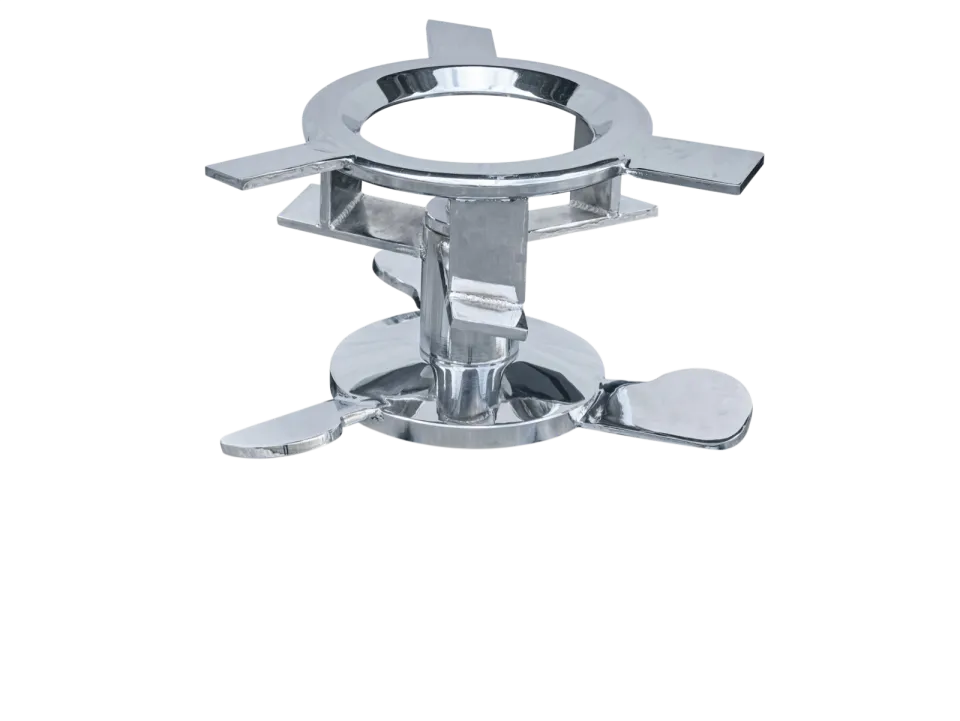
An under-filled vessel does not generate enough friction, so heating takes longer. An over-filled one never develops a proper vortex, and the top layer is poorly mixed. Running close to the batch weight the mixer was designed for is the simplest guarantee of blend quality. Blades wear as well; as the tip profile changes, heating time creeps up and homogeneity drops. Replacing worn mixer blades on time is one of the most effective ways to keep cycle times stable.
Cooling and storage
5. Do not cut cooling short
Once the hot blend reaches the cooler it should typically be brought down to around 40–50 °C. Under-cooled material lumps in the silo or big bag and can even partly gel under its own heat. Cooling performance depends heavily on cooling-water temperature and flow, and longer cooling times in summer, when the water warms up, are a familiar story. Erk’s catalogue specifies cooling water at 15 °C or below for its laboratory mixer, and on a production line, too, keeping cooling water as cold and stable as possible makes life easier.
6. Plan storage and conveying
Letting dry blend rest for a while before extrusion is common practice; it gives the material time to reach ambient temperature and settle. There is a limit, though: blend left open for long periods takes on moisture. Segregation during conveying also needs attention, because long, fast pneumatic lines can increase the risk of fine additives separating out. Choose flexible-spring, screw or air conveying to suit the material and the distance; our extruder feeding systems cover all three.
Quality control
7. Measure homogeneity instead of guessing
Simple tests on every batch, or on samples at fixed intervals, catch problems before they reach the extruder. Common checks include:
- Bulk density: a clear shift between batches points to a change in absorption or discharge temperature.
- Flowability: flow time through a standard funnel gives early warning of bridging at the feed throat.
- Sieve analysis: the share of lumps and coarse particles reveals cooling or moisture issues.
- Colour and thermal stability: pressed plaques or rheometer tests help catch deviations in stabiliser dosing.
Trialling a new formula at small scale before it goes into production avoids wasting raw material on full-size batches. Erk’s laboratory mixer is designed for exactly this kind of R&D and formula development work.
Let’s look at your line together
Getting these seven points right takes more than a good mixer: it takes accurate dosing, adequate cooling and controlled conveying. To pinpoint the bottleneck on your line, send your formula and capacity details through the quote form. For the fundamentals of the hot and cold stages, see our article on how a heater–cooler (hot/cold) mixer works, and for the causes of lumps, poor flow or yellowing, read PVC dry blend problems and how to fix them.