Applications
PVC foil
With PVC film and foil, every flaw in the blend shows up on the surface as the gauge gets thinner. We explain how dispersion, sieving and repeatable dosing help reduce gels and bubbles.
PVC film and foil are made by calendering or extrusion and end up in packaging, decorative laminates, stationery and much more. Rigid film contains little or no plasticiser, while flexible film carries a lot of it. Either way, the material is thin, so the smallest defect in the blend becomes visible and repeats along the length of the roll.
Where thin-film defects come from
The small spots known as fish-eyes or gels usually trace back to resin particles that did not fuse properly, clusters of undispersed additive or foreign particles. Poor pigment dispersion causes colour banding, and moisture can cause bubbles. Keeping these to a minimum requires every batch to follow the same temperature profile, every additive to coat the resin evenly and the cooler to bring the blend down without lumps. Sieving the blend on its way to the line adds a final safety net. Blend-related causes of gels, bubbles and colour banding are covered in more depth in PVC dry blend problems and fixes.
Calender lines tend to run for long stretches without stopping, and even a brief hiccup in supply can appear as gauge variation on the roll. A buffer silo between mixer and line, with mixer capacity set a little above average consumption, means one late batch does not halt production. With clear rigid film, stabiliser and lubricant choices also affect transparency, so trial any recipe change on a small scale first.
Recommended equipment
For the main mixing step, the EPM-H horizontal heater–cooler mixer series provides batch sizes that can keep pace with continuously running calender and extrusion lines. In film recipes, minor ingredients such as stabilisers, lubricants and pigments largely decide quality, and automatic powder dosing weighs even these small amounts under computer control. For flexible film, plasticiser can be added through an automatic liquid dosing system linked to the powder dosing.
Against foreign particles and agglomerates, the powder sieve from the auxiliary equipment range forms an effective barrier between mixer and line. Plants that struggle with humidity can also consider a dehumidifier and an air set. All powder and liquid weighing options are under dosing systems, and the hot/cold mixer series under heater–cooler mixers.
Checklist for a film line
- Do you produce rigid film, flexible film, or both?
- Are gel and bubble complaints concentrated on a particular shift or recipe?
- Is the blend sieved before it goes to the line?
- Are pigments added as powder or as masterbatch?
- Are humidity and temperature controlled in the storage area?
Products for this application
-
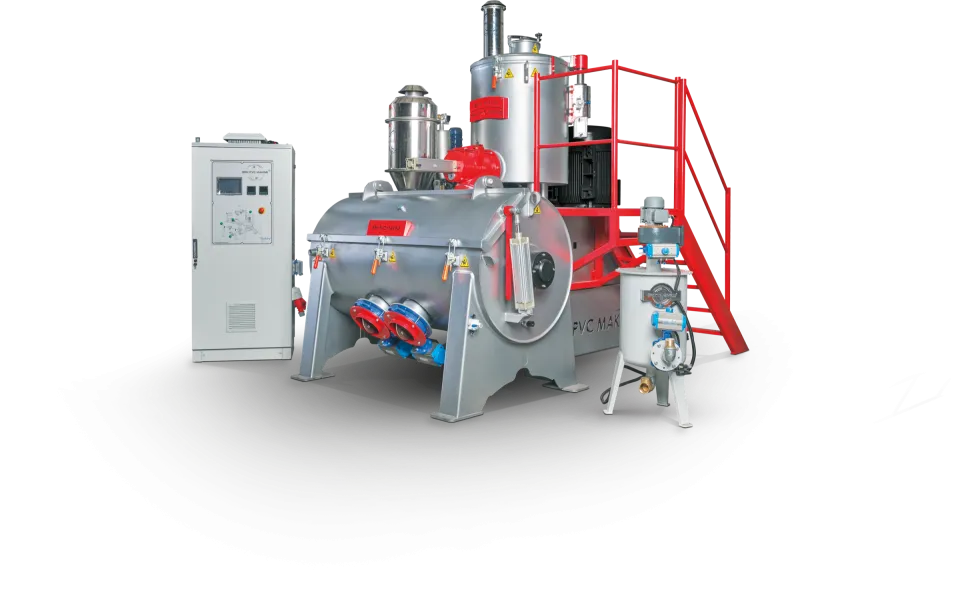 EPM-H
Horizontal PVC Turbo Mixer
The EPM-H series pairs a high-speed (turbo) heater mixer with a horizontal cooler mixer: a hot/cold mixing line for PVC dry blend. Five…
View -
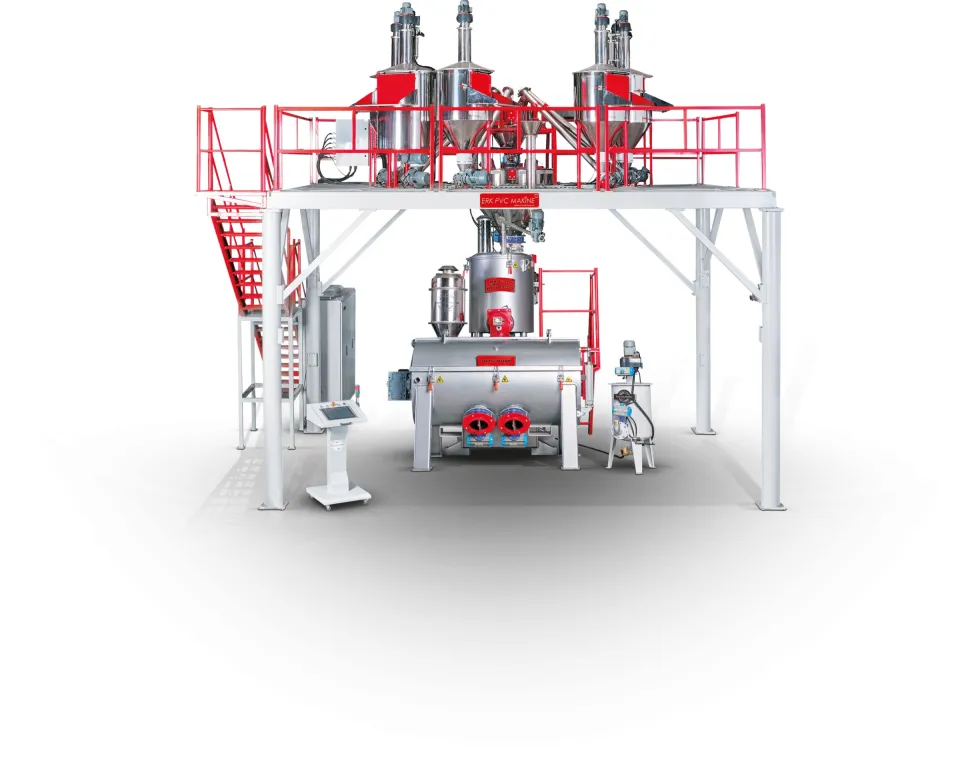 H / V
Gravimetric Powder Dosing System
The automatic gravimetric powder dosing system weighs the PVC formulation under computer control, hands-free, transfers it to the mixer…
View -
Liquid Dosing System
The automatic gravimetric liquid dosing system weighs plasticisers such as DOP and DOTP, and the liquid stabilisers needed for soft PVC…
View -
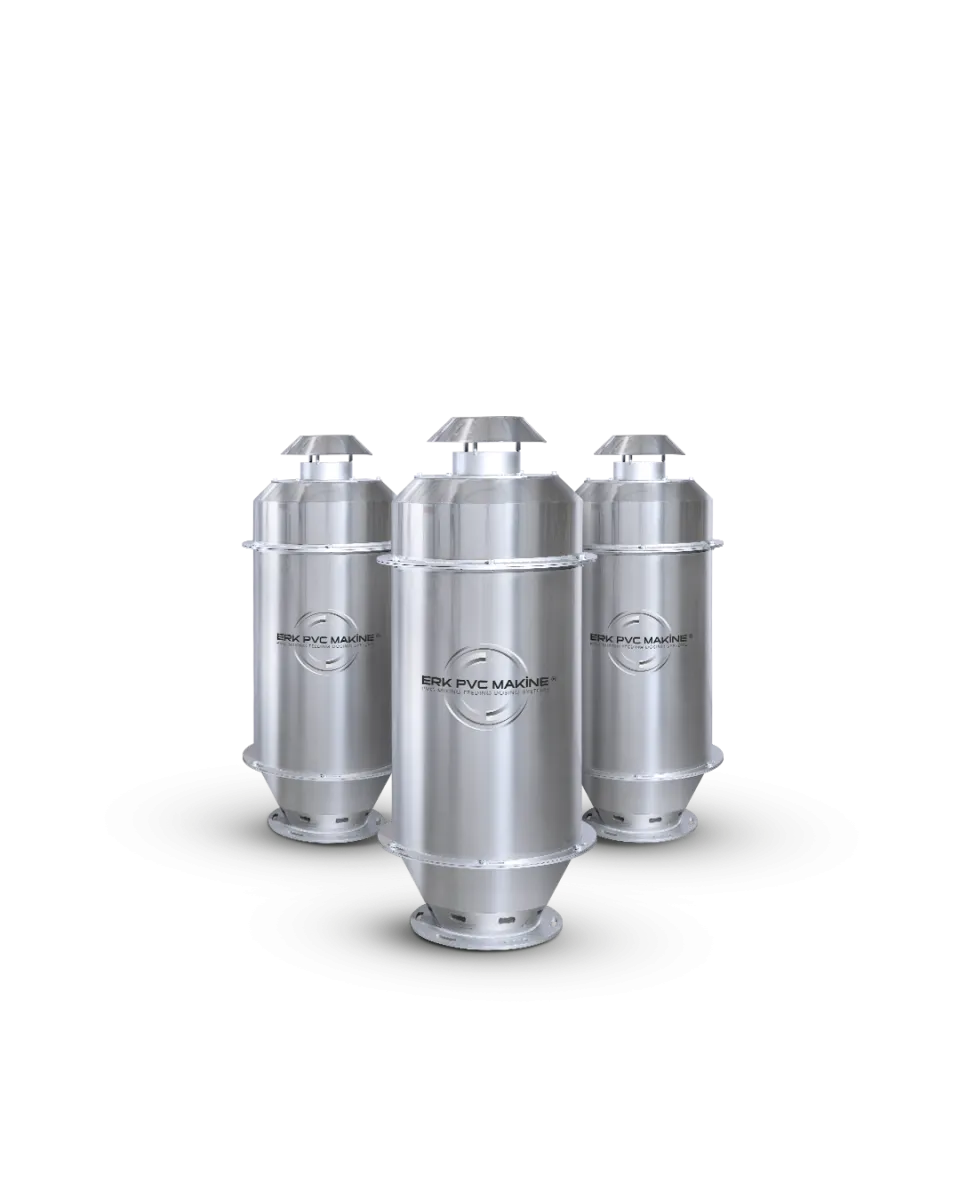 JET
Jet Filters and Auxiliary Equipment
Jet filters, air filters, vacuum systems, powder and granule sieves, air sets, blowers and dehumidifiers: the auxiliary equipment that…
View
Quote request
Request a quote for a mixer or mixing system
Share your target capacity and application; our engineers will reply with a quote for the right model and system configuration.
- 01Fill in the form or call us
- 02We clarify your application and capacity
- 03We send a quote with a model and system proposal